Wednesday, 17 June 2009

The Shell Grotto, Margate, Kent

Shell grotto
Found in 1835, whilst digging for a duck pond, the shell grotto is an anomaly. As the name suggests, the underground passage and chamber are covered everywhere in local shells, arranged in pictures and patterns. No-one knows why or when the grotto was built, but there are many speculations including the builders being the knights templar.

Tuesday, 16 June 2009

The Needles. Isle of Wight.

Needles Wight
The Needles
Needles isle of Wight
The Needles, on the Isle of Wight are said to be one of the top 10 natural wonders of the British Isles. They are situated on the Far west side of the island. They take they name from fact that one of the stacks was tall and pointy, like a needle. Unfortunately this stack fell down in a storm in 1764. One of the best ways to see the Needles close up is by a boat, there are a number of tourist boats offering sight seeing trips are the Island. As well as boat, from the headland you can walk or take a cable car down to Alumn bay to get a good view. There is also a road, which winds to the top of the headland and you can look down upon the Needles, but there is no access for cars and you have to take a bus.

Malham . Yorkshire Dales.


MalhamIf you are ever in the Yorkshire Dales, Malham is a must see. It is beautiful English village, with delightful English pubs and quaint shops. There is a small stream running through the village, shallow enough for kid to paddle safely in. A short walk from the village is Malham Cove. Malham cove was once a impressive waterfall (think a smaller version of Niagara falls) the river which use to fall over the top, now appears from under the cliff of the cove (again plenty of places to paddle and rocks to climb on).
A mile (up hill) walk from the cove and you come to Malham Tarn. Malham Tarn is a small glacier lake, formed during the ice age. It is also the highest lake in England.
Malham tarn

Monday, 15 June 2009

Hadrian's Wall.

Hadrians wall

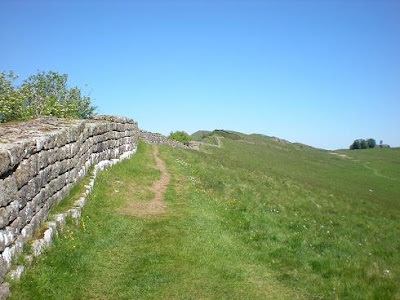
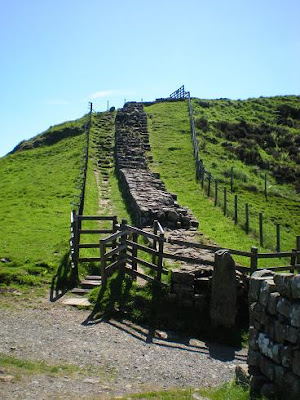
Hadrian's Wall runs from Carlisle in the West to Newcastle in the East. Following the wall is 73.5 miles (80 Roman miles) of footpath. The wall was started around AD122 by Emperor Hadrian and was built to prevent attacks from the Pictish tribes from Scotland. Originally the wall is said to have been 6 metre high, though, at most it is now 1.5 metres.
Every Roman miles along the wall there was a fort and every 1/3 mile a watch tower. Though most of the wall, forts and watchtowers are now little more than foundations you still get a sense of awe at the man power and effort required to build such a feat. It an impressive place to visit, with (in the right weather) stunning views of a beautiful part of the country.

Hadrian's wall

High force Waterfall. County Durham.


This beautiful waterfall is a must see if you are in this part of Britain. Situated near Middleton-Tees-Dale, High force waterfall is often wrong stated as being the highest natural waterfall in Britain, that award goes to Cautley Sprout in Cumbria. It is however one of the most spectacular. There is a short wall through beautiful woodland to the bottom of the waterfall. Those of you who are feeling very energetic may want to climb up the stairs to the top, and the very brave can peer over the edge and look down the fall, though I do warn you it is quite dangerous and the rocks at the top can get slippy.